Oclussion
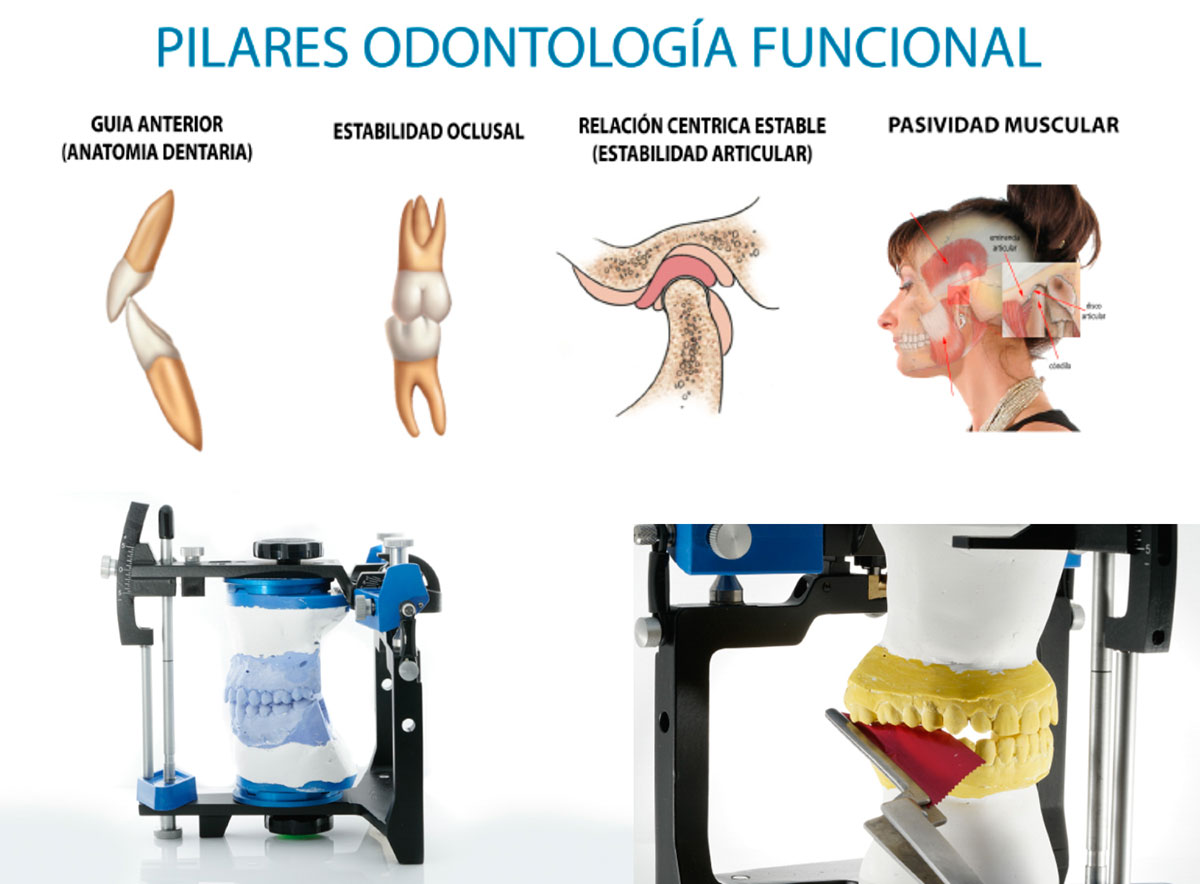
This specialty in dentistry deals with the orofacial system in function of the teeth, masticatory muscles and mandibular temporary joint. It is probably the most underestimated area in dentistry but one of the most important for the correct diagnosis and treatment of the all masticatory system.
Its most common pathology is bruxism, an oral parafunctional activity of non control, unconscious and repeated grinding of the teeth or jaws. The principal symptoms are pain or discomfort of the masticatory muscles, neck, headache, ears, temporary mandibular joint, amongst others. The clinical signs more often encountered are tooth wear, fracture or displacement of restorations, muscular fatigue, gingival recessions, pain of the temporary mandibular joint, amongst others.
All these signs and symptoms tell us that the masticatory system is not functional and we have to treat it at multiple levels (occlusion and dental anatomy, temporary mandibular joint, muscular, psychological and emotional factors, nutrition, etc.) to give back health and function to the system depending on the case.

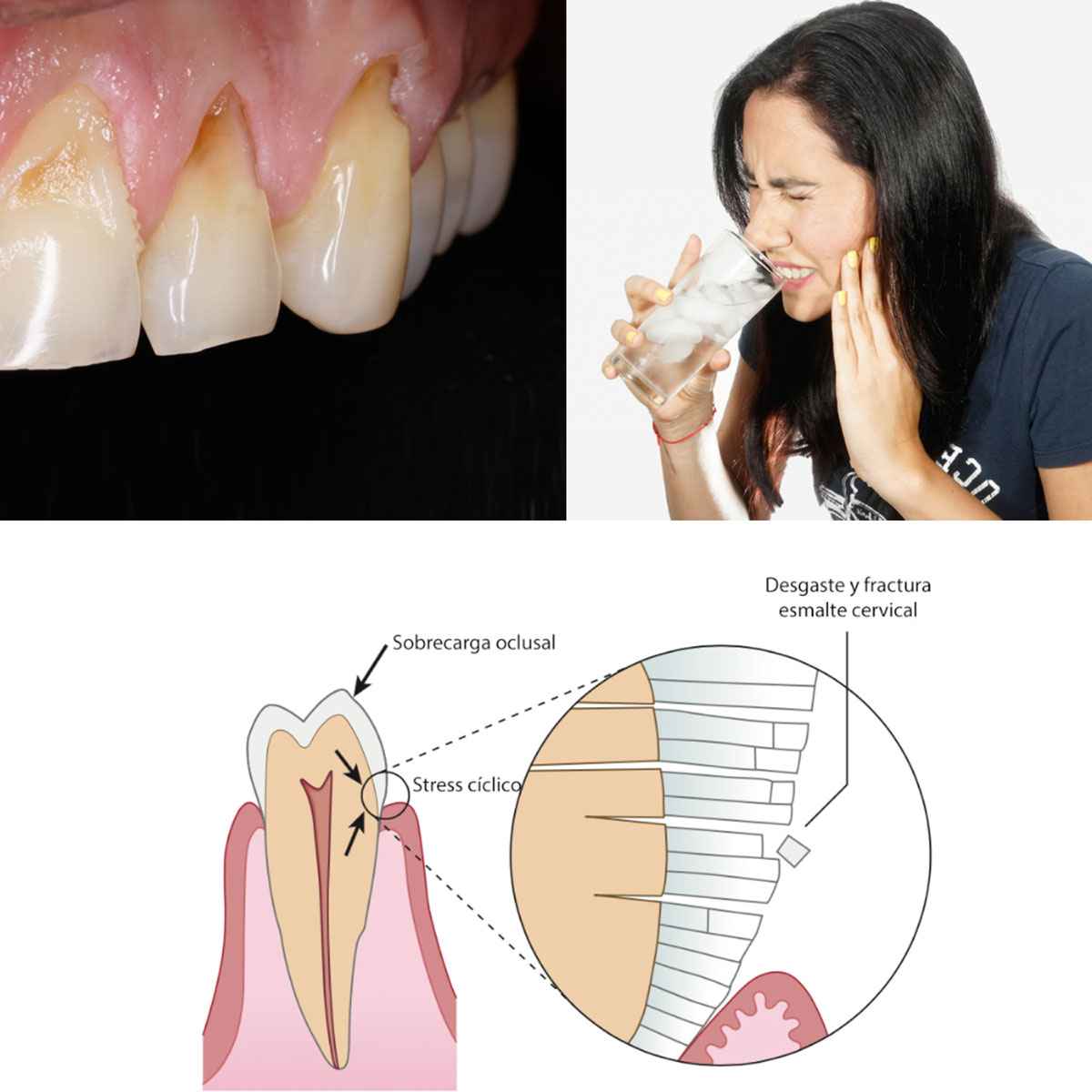
Many patients don’t know this but one of the main etiologies of tooth sensitivity is bruxism. The grinding of the jaw can produce micro fractures of the enamel at the cervix of the teeth called abfraction. Once the enamel is lost, tooth sensibility could appear because one of the qualities of the enamel is to be thermally isolated.
The treatment of bruxism is based on a multifunctional therapy that can be based on planes of stabilization, occlusal adjustments, facial physiotherapy, application of botulinum toxin, among others.